
Sponsored ContentPartner ContentWed 01 Jul 26
Zolve: A Bank Rejection is Not the End of Your Development

Major banks are not in the business of accommodating developers who fall outside their criteria.
For banks, a high LVR, limited presales, short track record, or a regional location is a reason to decline, not a problem to solve.
Zolve was founded on a different premise: that a bank rejection is not a project rejection and that the right lender for almost any viable development already exists somewhere in the non-bank market.
Zolve connects property developers with more than 80 independent, vetted non-bank and private lenders, offering access to construction finance, land acquisition loans and mezzanine facilities.
It also facilitates equity introductions for projects ranging from $1 million to $200 million and above.
“Banks have a customer client set,” Zolve managing director and co-founder Dale Wilkinson (pictured top) said. “If you don’t fit that particular mould, they don’t go out of their way to help you.”
Non-bank lenders offer flexible LVRs and no mandatory presales requirements.
Developers that engage Zolve receive competing term sheets from multiple lenders through a single process, providing genuine comparison and negotiating leverage without the time and opacity of approaching lenders individually.

Speed is the differentiator
A shovel-ready $20-million townhouse project can be funded in four weeks, while simple acquisitions have settled in days, Wilkinson said.
Former developer and Zolve co-founder Faye Hambour said, in one development she was involved with prior to her time with Zolve, approval from a major bank took nine months to receive.
During that time, a valuation expired and a civil contractor walked from the project.
“Had we been working with Zolve, what happened to us in that development would not have happened,” she said.
‘No deal, no fee’ model structured around settlement
A property developer scrambles together $15,000 in upfront fees for a broker who promises access to finance and receives no loan.
It is not an isolated case. Across the development industry, mandate fees charged without guaranteed outcomes have become a recognised hazard of seeking non-bank finance—one that Zolve has built its business model to counter.
Zolve charges no upfront fees at any point. The firm is paid only when a loan successfully settles.
That said, some non-bank and private lenders may charge their own due diligence or work fees on large-scale construction or complex loans, which are outlined in their term sheet.
“Our ethos has always been: if we don’t settle, we don’t charge,” Wilkinson said.
Zolve recently worked with a developer considering a site in Bathurst, commissioning an independent valuation that revealed the project would not stack financially.
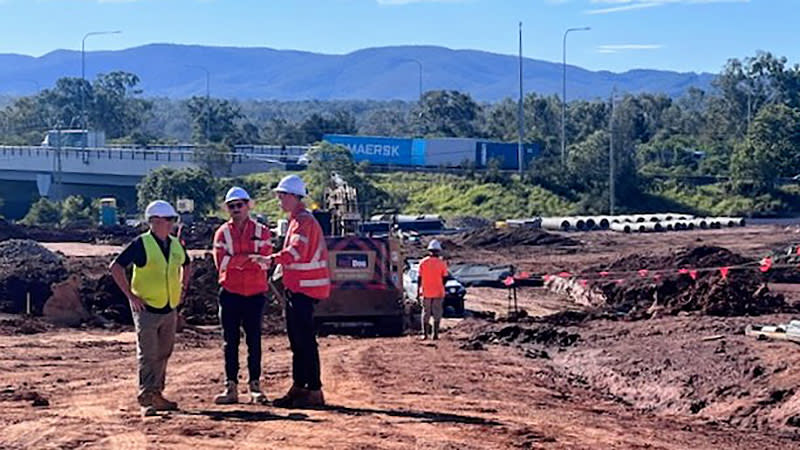
The developer was advised accordingly, potentially saving $300,000 to $400,000. That deal did not go through, but the developer valued his experience with Zolve and has since returned with another viable project.
John Sage, a developer with more than 40 years’ experience across 20-plus major projects, said, “Dale went the extra mile by assisting us to analyse multiple competing finance offers and was able to distil the most competitive offer in simple and easy to understand terms”.
‘Loans as unique as you’
Matching the right lender to the right deal is where Zolve most differs from a standard broker engagement “because every loan scenario requires its own solution”, Zolve co-founder Linda Wilkinson said.
With more than 80 lenders on the platform, each carrying different risk appetites, the firm’s value lies in knowing which lender to approach for a given scenario.
“It’s very much a fine-tuned negotiation between these parties to find something that works,” she said.
According to Hambour: “the Zolve model is way more intimate and proactive than a bank would ever be.”
For developers whose projects fall outside standard bank criteria, Zolve’s pitch is simple: a bank rejection is not a project rejection. It is a prompt to look elsewhere.
The Urban Developer is proud to partner with Zolve to deliver this article to you. In doing so, we can continue to publish our daily news, information, insights and opinion to you, our valued readers.





